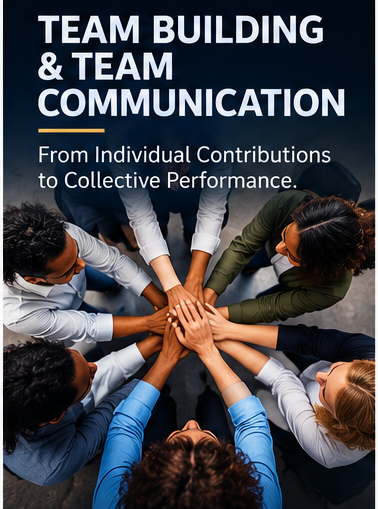

TEAM BUILDING & COMMUNICATION
From Individual Contributions to Collective Performance.
A group of talented employees does not automatically become an effective team.
Organizations bring together individuals with different professional backgrounds, communication styles, personalities, experiences, and perspectives.
Although these differences can contribute to innovation and organizational success, they can also create misunderstandings, competing expectations, and challenges in collaboration.
Effective teamwork requires more than assigning responsibilities and expecting individuals to cooperate.
It requires a shared understanding of organizational purpose, mutual respect, effective communication, trust, and accountability.
This highly interactive course examines the human and organizational factors that influence team cohesion, collaboration, and performance.
Participants explore how individual perceptions, communication habits, organizational culture, and group dynamics affect the ability of employees to work toward common objectives.
Through structured team-building exercises, collaborative challenges, and facilitated discussions, participants experience firsthand how communication barriers, assumptions, and interpersonal behaviors influence group performance.
The course encourages employees to recognize individual strengths, appreciate differing perspectives, and understand how their actions contribute to the effectiveness of the larger team.
Rather than relying solely on traditional team-building activities, this course connects each exercise to practical organizational challenges and established leadership principles.
-
Participants will explore how to:
Identify characteristics of effective and ineffective teams.
Examine how organizational mission statements and core values influence team performance.
Recognize communication barriers that interfere with collaboration.
Understand how individual perceptions and assumptions affect group decisions.
Strengthen trust and mutual respect through collaborative exercises.
Identify workplace behaviors and cultural factors that undermine team cohesion.
Explore how information is communicated, interpreted, and filtered within teams.
Recognize individual strengths and their contributions to collective performance.
Apply structured approaches to accomplishing shared objectives.
Develop practical strategies for improving team communication and accountability.
Learning Experience
This course emphasizes experiential learning through structured group activities, collaborative exercises, and guided reflection.
Activities can be customized to reflect the organization's mission, operational challenges, leadership structure, and desired learning outcomes.
Organizational Value
Organizations benefit when employees understand not only their individual responsibilities but also how their behaviors influence collective performance.
This course supports stronger workplace relationships, improved collaboration, greater communication effectiveness, and increased alignment with organizational goals.
The Takeaway: Teamwork is not simply working alongside one another. It is understanding how individual contributions create collective success.